
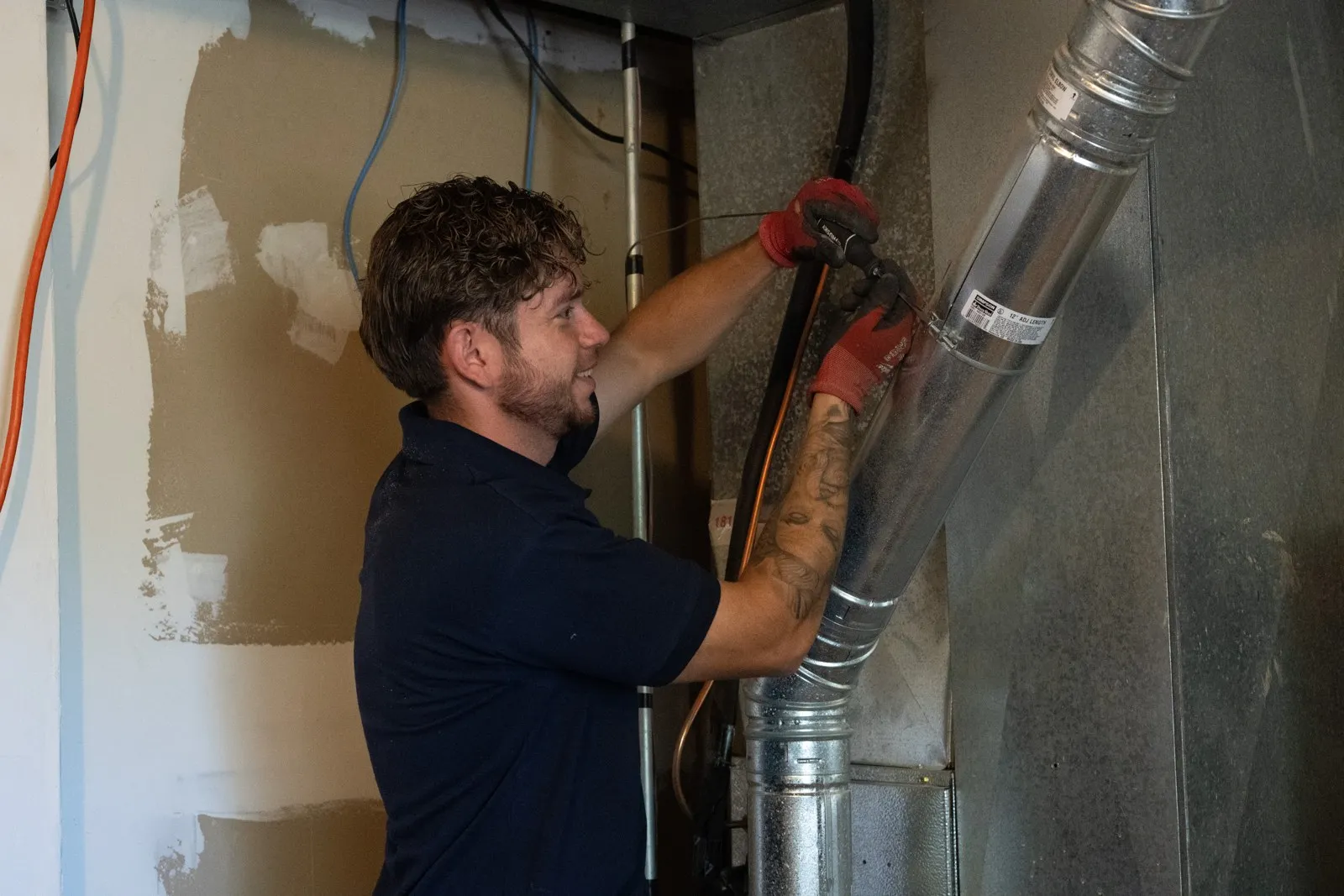
Every furnace in Utah makes carbon monoxide. That is not a scare line; it is how burning natural gas works. A healthy furnace makes it inside a sealed heat exchanger and sends it up the flue and out of the house, and you never meet it. The entire safety story of a gas furnace is about keeping that one boundary intact. This post is the plain version of what can go wrong, what to watch for, and what a real safety check tests, so you know what you are buying when someone says “tune-up.”
What carbon monoxide is, in two sentences
Carbon monoxide is the gas you get when fuel burns without quite enough air. It is colorless and odorless, it binds to your blood in the place oxygen should go, and at high enough levels it kills people in their sleep. The gas smell added to natural gas is a different thing entirely; carbon monoxide has no smell to warn you.
How a furnace crosses the line
Four failures account for nearly every furnace-related exposure we have seen or read about on the Wasatch Front:
- A cracked heat exchanger. The heat exchanger is the metal wall between the burning gas and the air that goes to your rooms. Twenty winters of heating and cooling cycles can crack it, and once it cracks, combustion gases can mix with the air the blower is pushing into the house. This is the one that condemns a furnace, and it is also the most over-diagnosed problem in the trade, which is why we show you the crack with a camera or a mirror before we say the word.
- A blocked, rusted, or disconnected flue. A bird’s nest in the vent, a corroded joint in an old metal flue, a PVC pipe that was never glued, or a termination buried under a snowdrift. If the exhaust cannot get out, it comes back.
- Starved combustion. A furnace in a tight closet with no combustion air, a dirty burner, or a gas pressure set wrong burns rich and makes far more carbon monoxide than it should, even with the exchanger intact.
- Backdrafting. A powerful kitchen hood or a leaky return duct can pull the house into negative pressure and drag flue gases back down an old natural-draft vent. Older homes with a furnace and water heater sharing one metal flue are the usual case.
None of these announce themselves. The furnace keeps running and the house stays warm.
The warning signs that do show up
- A detector alarm. Treat it as real every time. Open the doors, get everyone out, and call 911 from outside. The fire department carries meters and will tell you whether it is safe to go back in.
- Flu symptoms without a fever that several people in the house share and that ease up when you leave for a few hours. Pets get it first.
- Soot or scorch marks around the furnace, a yellow or wavering flame instead of a steady blue one, or rust and water streaks on the flue.
- Moisture or frost on windows in rooms that never had it, which can mean combustion gases are venting into the house instead of outside.
- A pilot or burner that keeps going out on an older furnace.
If you see any of these, stop using the furnace and call us. The $69 diagnostic exists for exactly this, and it is waived if we do the repair.
The detector rules that matter
Utah homes should have a carbon monoxide detector on every level and outside each sleeping area, which is also what the fire code requires for new construction. A few details that make the difference:
- Keep detectors at least 15 feet from the furnace, water heater, and stove, so a normal start-up puff does not cause false alarms that teach you to ignore the real one.
- Battery-only units need new batteries every fall. Plug-in units with battery backup are easier to live with.
- Every detector has an end-of-life date printed on the back, usually seven to ten years from manufacture. A detector past that date can look fine and never alarm.
- Combination smoke and carbon monoxide units are fine, but mount them where the carbon monoxide rule says, not just where the smoke rule says.
A detector is the last line of defense. It tells you after the furnace has already failed. The first line is the inspection.
What a real safety check tests
This is the part to compare quotes on. A “$59 tune-up” that takes twelve minutes is an inspection that sells you something. A working safety check on a gas furnace includes:
- Heat exchanger inspection, visually with a mirror and camera, and on older units a test that looks for flame disturbance when the blower starts, which is the classic sign of a crack.
- Combustion analysis with a meter in the flue, reading carbon monoxide, oxygen, and flue temperature. Numbers, not a glance at the flame.
- Vent inspection from the furnace to the termination: slope, support, joints, corrosion, and whether the outside cap is clear.
- Draft and spillage test on natural-draft furnaces and water heaters, with the kitchen hood and dryer running, to catch backdrafting.
- Gas pressure measured at the valve and set to the manufacturer’s spec, because a furnace burning too rich makes carbon monoxide even when everything else is right.
- Every safety switch tested: rollout switches, pressure switch, high limit, and the flame sensor that shuts the gas off when the burners fail to light.
We run that list on every $120 tune-up and on any no-heat repair where the furnace is more than a few years old. If the exchanger is cracked, we show you, we explain what it means, and the furnace comes off line until it is replaced. That is the one case where we will not leave a furnace running, and we would rather tell you in October than discover it in January.
When replacement is the safe answer
A cracked heat exchanger on a furnace past its fifteenth winter is not worth a new exchanger; the labor and the part cost more than the furnace is worth and the rest of it is just as old. That is the honest moment to talk about a replacement, and the good news is that a new furnace is sealed-combustion, vented in PVC straight outside, and tested with a meter before we leave. Every install finishes in one day with the free 5-year labor warranty. And if someone else has already told you your exchanger is cracked, ask to see it, then send us the quote. The second opinion is free, and we have put plenty of condemned furnaces back into safe service.
Have not had the furnace checked since last winter? Call or text (801) 678-5748, Monday through Friday, 8 AM to 8 PM, in English or Spanish. Put new batteries in the detectors tonight either way.