
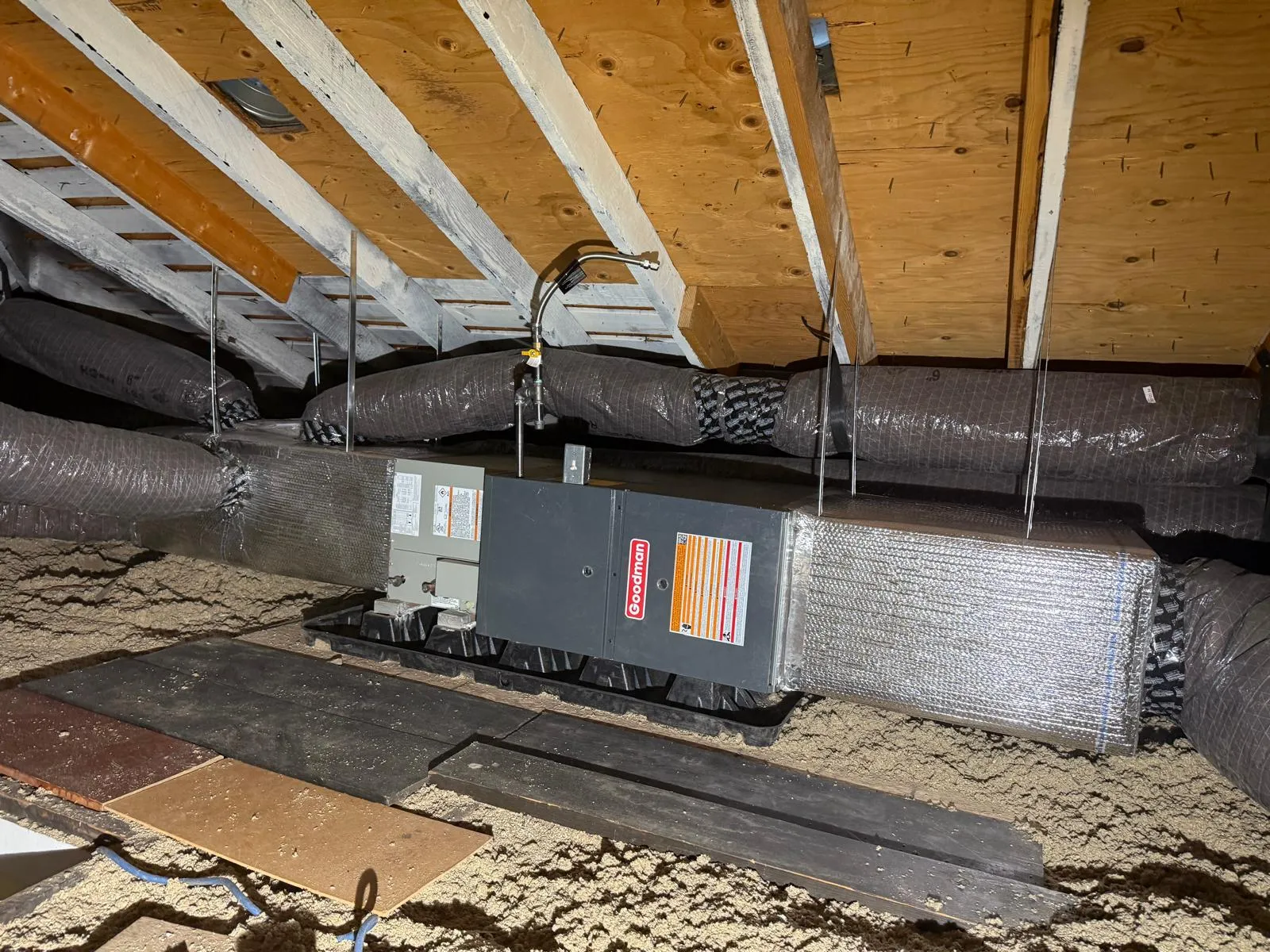
Every year, the same thing happens along the Wasatch Front: the first real cold snap lands sometime in October, thousands of furnaces get switched on for the first time in seven months, and the ones that were quietly broken all along pick that exact week to prove it. Every HVAC shop’s phone rings at once, and homeowners who could have found the problem on a mild September afternoon are instead waiting their turn in a cold house.
That’s the whole case for a fall tune-up, and for booking it early. But “tune-up” gets used loosely in this industry, so let’s be specific about what you should actually get for your money.
What a real tune-up includes
A working furnace tune-up is service, not a walk-past with a clipboard. On ours, the technician:
- Pulls and inspects the burners and cleans them if they’re dirty
- Inspects the heat exchanger — the wall between the flame and the air you breathe — for cracks and corrosion
- Checks gas pressure and adjusts it to the manufacturer’s spec
- Tests the ignition system and flame sensor (the number-one cause of “furnace won’t start” calls) and cleans the sensor
- Checks the blower motor and wheel, and the amp draw on the motor
- Tests safety switches and limit controls
- Checks for carbon monoxide and proper venting
- Inspects the condensate drain on high-efficiency furnaces (a clogged drain is a classic mid-January shutdown)
- Replaces or checks the filter and measures temperature rise across the system
The point of all that isn’t ceremony. Most winter breakdowns are one of a handful of small failures — a dirty flame sensor, a weak igniter, a clogged drain — that cost little to catch in September and a cold weekend to discover in January.
A tune-up is not an inspect-and-quote visit
Worth knowing as a consumer: some “cheap tune-up” offers in every market are really sales visits — a quick look, followed by a long list of recommended repairs, with the actual maintenance never quite happening. The tell is what’s on the checklist. If nothing gets cleaned, adjusted, tested, or measured, it wasn’t a tune-up.
Ours is a $120 full working tune-up — the real checklist above, at the full price, with no expiration date and no fine print. If we do find something genuinely wrong, we’ll show you what we found, explain what it means, and quote the fix separately so you can decide with the facts in front of you.
What you can do yourself (please do)
An honest shop will tell you there’s a slice of furnace maintenance that needs no technician at all:
- Change the filter — every 1–3 months during heating season. It’s the single highest-value maintenance act in HVAC, and it’s a five-dollar part.
- Open your supply vents and don’t block the returns. Closing vents to “push heat elsewhere” mostly just strains the blower.
- Put fresh batteries in the thermostat if yours takes them — a dead thermostat mimics a dead furnace and generates a lot of embarrassing service calls (we’ve all been there).
- Keep the area around the furnace clear. Cardboard boxes leaning against a gas appliance help nobody.
The tune-up covers everything on the first list; you cover this one, and your odds of a no-heat call this winter drop dramatically.
When the tune-up finds something real
Sometimes a tune-up turns into a bigger conversation — most seriously, a cracked heat exchanger, which can let combustion gases including carbon monoxide into your home’s air. That is a genuine safety issue and a furnace-replacement conversation, not a repair one on an older unit.
Our promise on that front is simple: we show you what we found, we explain why it matters, and the decision stays yours. A repairable problem never gets dressed up as a replacement — the same honesty standard we hold on cooling jobs. And if it does come to replacing a furnace, every Lucas install is finished in one day — nobody spends a winter night without heat for choosing to fix the problem properly — and carries our free 5-year labor warranty.
Why September, specifically
Three quiet reasons the smart money books early:
- The schedule is yours. Before the first cold snap, you pick the day and time that suits you. After it, you join the rush.
- Problems found early are fixed on your terms. A weak igniter found in September gets replaced on a comfortable afternoon. The same part found in January gets replaced after a cold night, at whatever the week’s schedule allows.
- The furnace runs cheaper all season. Clean burners, correct gas pressure, and a fresh filter mean the furnace does the same job on less gas — the tune-up quietly pays some of itself back every month it runs.
Ready to cross it off before the rush? Book your $120 tune-up online, or call or text (801) 678-5748 — Monday through Friday, 8 AM to 8 PM, English or Spanish. All makes and models, whether or not we installed it.